Guwahati, Apr 4 (PTI) An estimated 65 per cent of the electorate cast its votes in the first phase of assembly elections in 62 constituencies of Assam as polling, held amid tight security and under a rebel threat, was peaceful.
Around 60 to 70 per cent polling was reported from all the constituencies in Upper Assam, Barak Valley, the two hills districts of North Cachar Hills, Karbi Anglong and Sonitpur district on the northern bank of Brahmaputra.
The total electorate in the state is 85,09,011.
Hundred per cent polling was reported from two polling stations in the Naoboicha assembly constituency, while the Dhakuakhana seat where Prime Minister Manmohan Singh campaigned for Sports and Culture Minister Bharat Chandra Narah recorded a high 87 per cent.
The fate of 485 candidates including Chief Minister Tarun Gogoi, senior ministers Pradyut Bordoloi, Ajanta Neog, Prithivi Majhi, Gautam Roy and Bharat Chandra Narah, BJP state president Ranjit Dutta, former AGP president Brindabon Goswami and CPI National Council member Promode Gogoi were sealed in EVMs.
There was no report of any untoward incident from any part of the state, official sources said.
There were initial reports of EVMs malfunctioning, but the problems were rectified and polling was not affected, the sources said.
For the first time in 15 years, 41 cadres of the ethnic Karbi Longri N C Hills Liberation Front participated in the democratic process by voting in two designated camps in Karbi Anglong district.
The pro-talk faction of the ULFA led by ''chairman'' Arabinda Rajkhowa stayed away from the elections, while the anti-talk Paresh Barua faction had issued a threat to Congress leaders and workers in the state.
Polling was boycotted in 10 polling stations under Haflong police station with the Indigenous People Forum, an umbrella organisation of Hmar, Kuki and Zeme Naga tribes, demanding bifurcation of the North Cachar Hills district into two autonomous hills districts.
Nearly 35,000 central paramilitary forces were deployed for the elections.
The second and concluding phase of elections will be held on April 11 in the remaining 64 constituencies.
Guwahati
An estimated 45 per cent of the 85,09,011 electorate cast their votes till 2 PM in 62 Assam assembly constituencies where polling is on in the first phase today, election commission sources said.
Brisk polling ranging from 35-55 per cent was reported from all constituencies of upper Assam, Barak Valley, the hills districts of North Cachar and Karbi Anglong and Sonitpur district in the northern bank of Brahmaputra.
Polling was held up due to malfunctioning of EVMs at six polling stations at Lakhimpur, Naoboicha, Bokajan and Diphu constituencies but later picked up as the problems were tackled, the sources said.
There was no report of any untoward incident so far and for the first time in 15 years, 41 cadres of the ethnic Karbi Longri National Liberation Front participated and cast their vote in two designated camps in Karbi Anglong district.
The pro-talk faction of the ULFA led by the outfit chairman Arabinda Rajkhowa, however, decided to stay away.
The anti-talk Paresh Barua faction had threatened Congress leaders and workers in the state.
Polling was boycotted in 10 polling stations at Haflong by Indigenous People Forum, an umbrella organisation of Hmar, Kuki and Zeme Naga tribes, demanding bifurcation of North Cachar Hills district into two autonomous hills districts.
Chief Minister Tarun Gogoi accompanied by his wife Dolly and son Gaurav, Union DONER minister B K Handique and Lok Sabha MP Dip Gogoi, Speaker Tanka Bahadur Rai, Deputy Speaker Pranati Phukan, ministers Gautam Roy, Pradyut Bordoloi, Ajanta Gogoi, Nurjamal Sarkar, Prithvi Majhi and D P Gowala were among those who cast their votes.
There are 485 candidates in fray for the 62 of the 126 assembly seats where polls are on today, the sources said.
The election to the remaining 64 seats will be held in the second phase on April 11.
Guwahati, Apr 4: Polling for the first phase of Assembly elections in Assam for 62 of the 126 seats is going on today.
The voting, which started at 7 a.m. will continue till 3 p.m.
Four hundred and eighty five candidates, including 38 women, are in the fray for this phase. Congress and the Bharatiya Janata Party (BJP) have fielded candidates in all the 62 constituencies, while Asom Gana Parishad is contesting 51 constituencies.
There are 157 independent candidates in the fray for this phase.
Among the prominent candidates whose fate would be sealed in this phase include Chief Minister Tarun Gogoi, Power Minister Pradyut Bordoloi, state president of the Bharatiya Janata Party (BJP) Ranjit Dutta, and senior Asom Gana Parishad (AGP) leader Brindaban Goswami.
Elaborate security arrangements have been made to ensure free and fair polls.
A total of 2,033 booths have been identified as hyper sensitive, 2,985 sensitive and 817 hamlets as vulnerable.
Altogether 346 companies of central paramilitary forces have been deployed for the polls with 65 to 75 per cent of polling stations, including most of the critical ones, will be covered by central paramilitary forces and the rest by police, micro-observers and video-cameras.
The second phase of elections will be held on April 11. Results are due on May 13.
By Rupa Subramanya Dehejia
It’s election season. The states of Assam, Tamil Nadu, Kerala and West Bengal and union territory Puducherry go to the polls in coming weeks. Themes running through the election campaigns in all of these states include food inflation, corruption, governance, development, repercussions of national scandals — in particular the 2G spectrum scam – and, as ever, the specter of an anti-incumbency backlash.
Of course, it’s not all economics. Personalities and populism always figure in Indian elections, not least in Tamil Nadu, which features outsized political leaders who give away outsized goodies to their supporters. Although less colorful, versions of this potent electoral mix show up in the other states as well. Compare that with last year’s Bihar elections, which showed that a development-oriented policy built on good governance and sound fiscal management can be a winning ticket.
Can we expect an encore performance from one or the other of these two playbooks in the states going to the polls this time around?
In the coming weeks, Economics Journal will take part in the extensive coverage of state assembly elections you can look forward to on India Real Time. This week: The issues in Assam, the first to go to the polls.
This is a resource-rich state plagued by decades of insurgency, law and order problems, and illegal migrants. In addition, the state’s remoteness and poor infrastructure have held it back. Per capita income in the state is only 60% of the national average. This reflects both a lower starting point and on average lower growth than the country as a whole. As you’d expect, with lower income comes a comparably poor performance on human development indicators, ranking 14 out of 15 among major states. Interestingly, the literacy rate in Assam is higher than the national average so the picture is not entirely bleak.
Contrast these sobering statistics to the reported growth rate in declared assets held by 46 sitting legislators from a range of parties that are contesting in the first phase of the elections. These grew at an impressive rate of 197% between 2006 and now. Clearly something is growing rapidly in Assam! In addition to the rich, even some former militants and charge-sheeted members of the Assembly are in the fray.
The state’s experience also is suggestive of a political economy which involves a two-way causal relationship between insurgency and under-development. There’s a chicken and egg problem here: does under-development cause insurgency or insurgency retard economic development? To put it another way, which needs to come first, development or peace?
In 2001, when the Congress party unseated the Asom Gana Parishad, the new Chief Minister Tarun Gogoi made it clear which side of the debate he was on when he announced: “Development won’t wait for peace, rather development will bring peace in the state.”
After winning re-election in 2006, Mr. Gogoi is campaigning again on a development platform and highlighting his government’s successes in bringing development to the state. India’s Finance Minister Pranab Mukherjee, in Assam recently campaigning with Mr. Gogoi, made the case for improved fiscal management by the state government. Interestingly, he also argued that increased transfers from the central government, also Congress-led, has given the state government “more elbow room to take up more development work.”
Does this suggest that continued central government largesse will flow only if the Congress is returned to power in Assam? The canny Mr. Mukherjee of course didn’t say this explicitly, but the question is begged.
The AGP, now the main opposition party, is campaigning on allegations of corruption against the ruling Congress in its two consecutive terms in power. The principal scam centers around the allegation that in the North Cachar Hill district, a sum equivalent to approximately $250 million was diverted to the benefit of Congress ministers.
The AGP also contends that Congress has brought only “signboard” development, while genuine development has lagged behind. They have come up with a campaign manifesto which places inclusive development at its center. Even the Bharatiya Janata Party has been campaigning on a development platform in Assam.
Evidently, all of the major political parties in Assam have drawn lessons from Chief Minister Nitish Kumar’s electoral triumph in Bihar last year. They appear to believe that running on a development-oriented platform will bring success at the polls. We’ll know in a month how this has played out.
Share your thoughts on what you believe are the important economic issues in the state you live in. If you’re voting, how important are economic issues in your choice of whom to support? And if economic issues are important to you, are you voting based on your state’s recent economic performance or its future prospects? If you’re not voting this time around, are you watching the elections for clues on what may be coming your way?
Rupa Subramanya Dehejia writes Economics Journal for India Real Time. You may follow her on Twitter @RupaSubramanya.
Karimganj, Apr 2 (PTI) With just two days left for Assembly elections, 900 of the 1,161 EVM machines are not working in south Assam's Cachar district, officials said today.The faulty electronic voting machines (EVM) were displaying 'low battery' as their expiry date was July 2010, they said.Though the EVM's had July 2010 as the expiry date a label pasted on top put it as August 2012, they said.The problem was discovered when the EVMs were opened and tested before the polling agents as instructed by the Election Commission, they said.Four engineers of the company which supplied the EVMs had arrived from Kolkata and were trying since yesterday to rectify the problem, officials said."The engineers are working. We hope to solve the problem within a short time," Cachar district Returning officer Harendra Kumar Deb Mahanta told PTI.Meanwhile, polling personnel for the remote areas of the district had proceeded to their destinations with the remaining EVMs, they said.The remaining would go after the repair of the faulty EVMs.
In Assam, movement of poll parties began today for the first phase of elections to be held in the State on Monday. According to State Election Office sources, poll officials along with election materials left for their destinations in 69 remote centres covered by dense forests in Haflong Assembly constituency in North Cachar Hills district this morning. Poll officials in other remote areas of Karbi Anglong and riverine areas of the Barak Valley will start from tomorrow.
AIR Correspondent reports that the political fortune of 485 candidates, including 38 women contestants, will be decided in this phase of polling by an electorate comprising eighty five lakh nine thousand eleven voters. Eleven thousand two hundred sixty four polling centres are spread over 13 districts in Upper Assam, Barak Valley and two hill districts.
Meanwhile, with only a day remaining for campaigning for the first phase of elections, most of the parties are busy giving last minute touches to woo the voters. Congress president Ms. Sonia Gandhi is scheduled to address a series of election meetings at Karimganj, Bokajan and Khumtai Assembly segments today. Similarly, the senior BJP leaders -L.K.Advani and Narendra Modi are attending a series of election rallies at Khumtai, Rangapara, Dibrugarh, Dhemaji, Lumding and Naoboicha. The Asom Gana Parishad leaders- Prafulla Kumar Mahanta and Chandra Mohan Patowary besides top leaders from Left parties, AIUDF and other parties have also intensified their last minute campaigning strategy.
GUWAHATI, March 29 – The concept of eco-tourism which has found favour especially with the enterprising youth of the State is gradually changing rural economy, with many educated boys and girls getting involved with such tourism projects.
As this concept has been gaining ground, it has popularised ideas such as eco picnics, eco excursions etc amongst the nature lovers and students and to further propel ecotourism in the State, the Ecotourism Society of Northeast India has come up with a project of eco excursion for educational institutions of the region.
It needs to be mentioned here that another group of dedicated youths under the banner of Wave Ecotourism has been organising eco picnics for students regularly. As part of such eco picnic, the students learn to respond to nature and act as her sentinel.
According to functionaries of Ecotourism Society of Northeast India, the decision to launch eco excursions was taken in the backdrop of lack of exposure of the students to the rich treasures of the region.
“The times have changed. Gone are the days when excursions were just a fun outing. Now excursions are learning oriented, to understand the world around us, to find out the unexplored,” said Gautam Dutta, president of the society.
Dutta added that such eco excursion would introduce the young generation to the unexplored nooks and corner of their region and would go a long way in boosting the eco tourism efforts.
The main objectives of the eco excursions will be to highlight the eco tourism resources of North East India among the young generation, to create awareness among the students and motivate them towards the tourism industry.
Some of the destinations on such eco excursions will be Dibru Saikhowa National Park, Sivasagar, Tawang, Bomdilla, Bhalukpong, Manas National Park, Kaziranga National Park etc, informed Dutta.
KOKRAJHAR, March 27 – As the 13th Assam Assembly elections approach, internal crisis among some leading political parties in Kokrajhar at the headquarters of BTAD has grown as cracks have developed among party workers in some segments.
Significantly, the ruling political party BPF and its ally the Congress both have their share of the problem.
In a political shift, Parameswar Brahma, the sitting MLA and Parliamentary Secretary of Assam from BPF quit the party as he did not get the BPF ticket this time. Strong resentment prevails among BPF workers as a result of which the BPF had to change its candidate from Chapaguri LAC in which sitting MLA Thaneswar Basumatary was replaced by Hitesh Basumatary, EM of BTC. Similarly a BPF candidate Iyat Ali Sarkar from Sorbhog has been unexpectedly withdrawn with a compromise to leave the seat for the Congress candidate.
On the other hand, strong resentment also prevails over the selection of Rina Brahma from Kokrajhar West by the Congress party. Further the BJP candidate Santosh Tarafdar selected by the party in Gossaigaon LAC has also created dissatisfaction among a large section of BJP workers in Kokrajhar district.
Non-political bodies agenda: Several non-political organisations having stronghold across communities are emerging as key factors in wooing voters on the issues dominating in this area.
A leading Bodo organisation ABSU has already appealed to the Bodo political parties for unification move in view of the common issue of Bodoland Statehood claiming that the struggle of Bodo movement is as yet incomplete. At the same time, several demands of ABSU particularly in the field of education and social upliftment are yet to be achieved. However, the ABSU is keeping its stand of not taking side with any political party. It is therefore pertinent that on the pending demands ABSU may have a discontent over governance.
On the other hand, AKRSU which has a strong hold over the Rajbongshi communities in this region has been mounting their struggle for ST status and separate Kamatapur Statehood, could not find much favour with the government so far and it has appealed to this community not to vote for the Congress party. As such, a larger segment may be influenced by the decision of AKRSU to take the side of any candidate in the fray.
Further, AASAA alongwith other non-political organisations among Adivasis has also been repeatedly asking for a clear-cut decision of the government, primarily in respect of the ST status of this backward community. At the same time they have also focused on some horrible recent incidents of eviction in the Lungsung forest areas in Kokrajhar apart from the killing incident of leaders like Bosco Charmaco etc.
As such rising above political lines these non-political organisations have rational issues which are yet to be satisfactorily addressed.
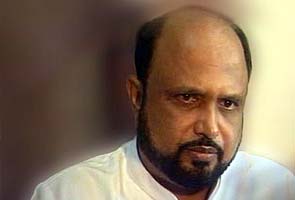
Guwahati: Two time former chief minister and Leader of the Opposition in the Assam Assembly Prafulla Kumar Mahanta has no car and has cash balance of only Rs. 11,117 in hand.
According to the affidavit filed in the Nagaon Deputy Commissioner's court, Mahanta who is contesting from two assembly constituencies of Bahrampur and Samuguri has declared his total movable assets to be Rs. 19,17,947.
Stating that he owns no vehicle, the former chief minister declared that the value of his plot of land was Rs. ten lakh and he has cash of Rs. 11,117.
In the affidavit filed, Mahanta said the market price of his assets currently was worth Rs. 12,10,000 while he has UTI bonds worth Rs. 25,200 and NSC postal savings amounting to Rs. 10,3358 and jewellery and gold worth Rs. 87,500.
The 53 year-old former chief minister has stated that his loans from bank stands at Rs. 29,998.
In contrast, his wife and former MP Dr Jayashree Goswami Mahanta is richer than him as she owns an ambassador car worth Rs. 97,650.
The wife of the former chief minister has a total cash in hand of Rs. 1,23,531 and a landed property in the Kharguli area of Guwahati valued Rs. 42,05,000.
According to the affidavit, her movable assets stand at Rs. 1,37,84,276 and the total market value at present of her assets are Rs. 2,67,50,000.
While her movable assets stands at Rs. 13,784,276, the UTI bond savings total Rs. 22,04,399 and NSC postal savings at Rs. 14,46,232.
The jewellery and gold of Dr Jayashree Goswami Mahanta is worth Rs. 2,25,000 and her outstanding bank loan is Rs. 1,56,22,135.

Leader of the Opposition and former Assam Chief Minister Prafulla Kumar Mahanta today said his party Asom Gana Parishad (AGP) has filed a complaint with the state election commission against the ruling Congress.
A private satellite TV channel and a local channel of Nagaon had aired paid news supporting the Congress for which the complaint was filed, Mahanta told PTI here.
Without naming the channels, the two-time former chief minister threatened to move court if the EC failed to take action.
Mahanta is the party's nominee in two constituencies of Bahrampur and Samuguri which falls under Nagaon district.
Guwahati, Mar 20 : Several lakhs of rupees was today seized from a businessman at Satmile area in Assam's main city Guwahati today.
Police said the seizure was made during a routine check at an inter-state check-post with Meghalaya.
The businessman, Nanda Kishore Prajapati, was on way to Guwahati from Garo hills in Meghalaya. Police seized Rs 7.40 lakh from Prajapati.
Over Rs 40 lakh in cash has been recovered from various places in the run-up to the election. Assam goes to the polls on April 4 and 11.


